Waffle House Index: The Simple System That Measures Storm Impact
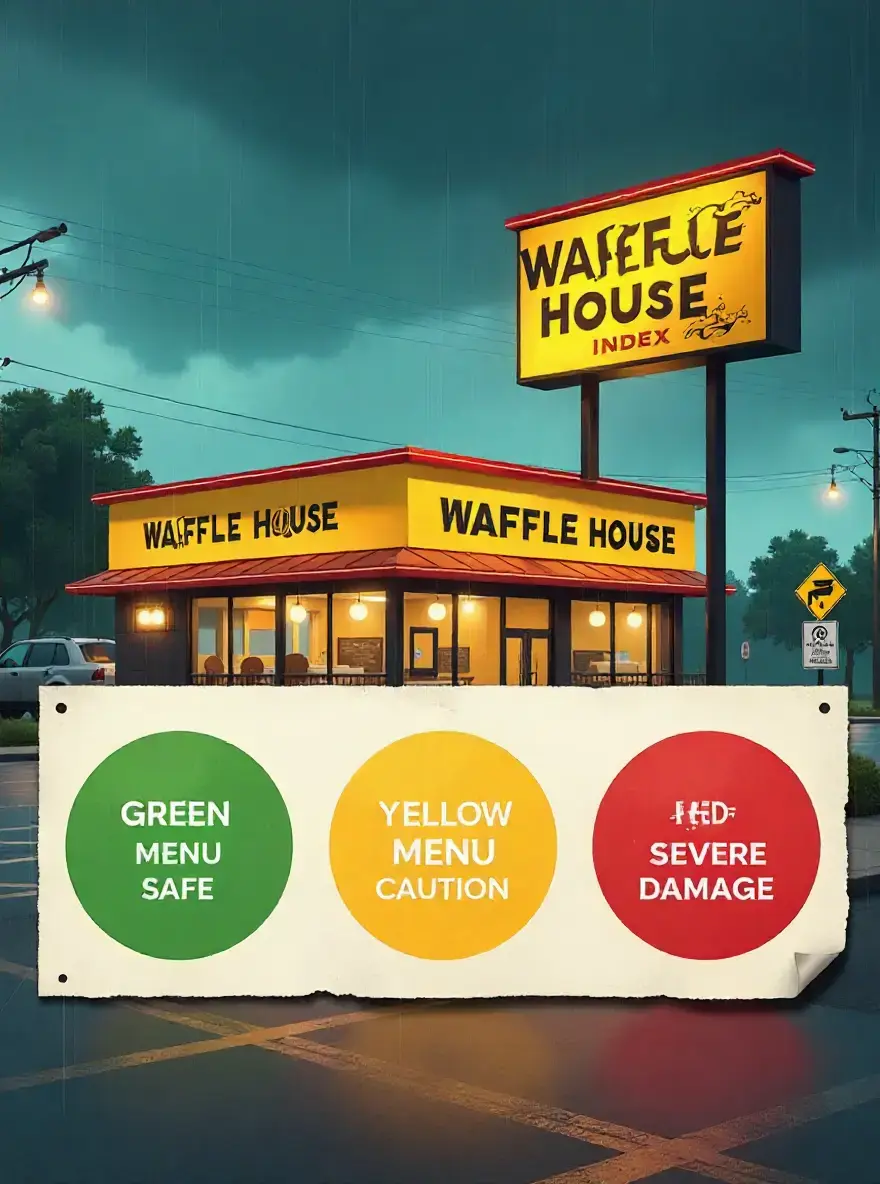
The Waffle House Index is one of the simplest ways to tell how bad a storm really is. When a Waffle House stays open and serves a full menu, the area is mostly fine. When it switches to a smaller menu, it means there’s trouble with power or supplies. And if it closes, it’s a strong sign of serious damage.
People like this system because it’s based on what’s actually happening. It gives emergency workers a clear picture long before official reports come out. In this article, you’ll learn what the index means, how it started, and why it still matters during disasters like Hurricanes Katrina, Florence, and Milton.
What Is the Waffle House Index and What Do the Colors Mean?
The index of Waffle House helps emergency teams understand how much a community has been affected by a storm. It uses three colors to show how badly an area is hit:
| Color | Meaning | What It Signals |
|---|---|---|
| Green | Full menu | Power and supplies are fine |
| Yellow | Limited menu | Power or deliveries are limited |
| Red | Closed | Major damage or unsafe conditions |
When people say the Index is yellow, it means restaurants are open but struggling to stay that way. It’s a fast and simple way to see which areas are safe and which ones need help.
Why Was the Index Waffle House Created?
People often wonder why a breakfast restaurant became part of disaster management. The reason is simple. Waffle House is known for staying open no matter what. It runs 24 hours a day, every day of the year, even during hurricanes.
After major storms, it’s hard to know which neighborhoods are doing okay and which ones need help. The index of Waffle House gives an instant snapshot. If a Waffle House closes, it’s usually because the damage is serious. That makes it a quick and trustworthy sign for responders.
Who Came Up with the Index of Waffle House?
The idea came from Craig Fugate, a former FEMA Administrator who led Florida’s emergency management team. He noticed a pattern during hurricanes. Whenever Waffle Houses closed, the damage nearby was often severe. That simple observation turned into a national reference point used by news outlets and emergency agencies.
Pat Warner, a senior Waffle House executive, helped make it better by sharing how the company tracks every store during storms. Together, they turned the index into one of the most recognizable tools in disaster response.
How Does Waffle House Stay Open During Disasters?
Many people ask how Waffle House keeps serving food when almost everything else shuts down. The answer lies in planning and teamwork.
The company follows a detailed disaster plan called the Waffle House Storm Playbook, which includes:
- Jump Teams who travel to damaged areas to reopen stores
- Backup generators to keep kitchens running when power is out
- Simplified menus that require fewer ingredients and less equipment
- Supply trucks are sent ahead of time before a storm hits
- Safety inspections to protect staff and guests
This careful preparation allows Waffle House restaurants to reopen quickly. That’s why their status is used as a live indicator of how a community is coping.
When Has the Index Been Used?
Hurricane Florence (2018)
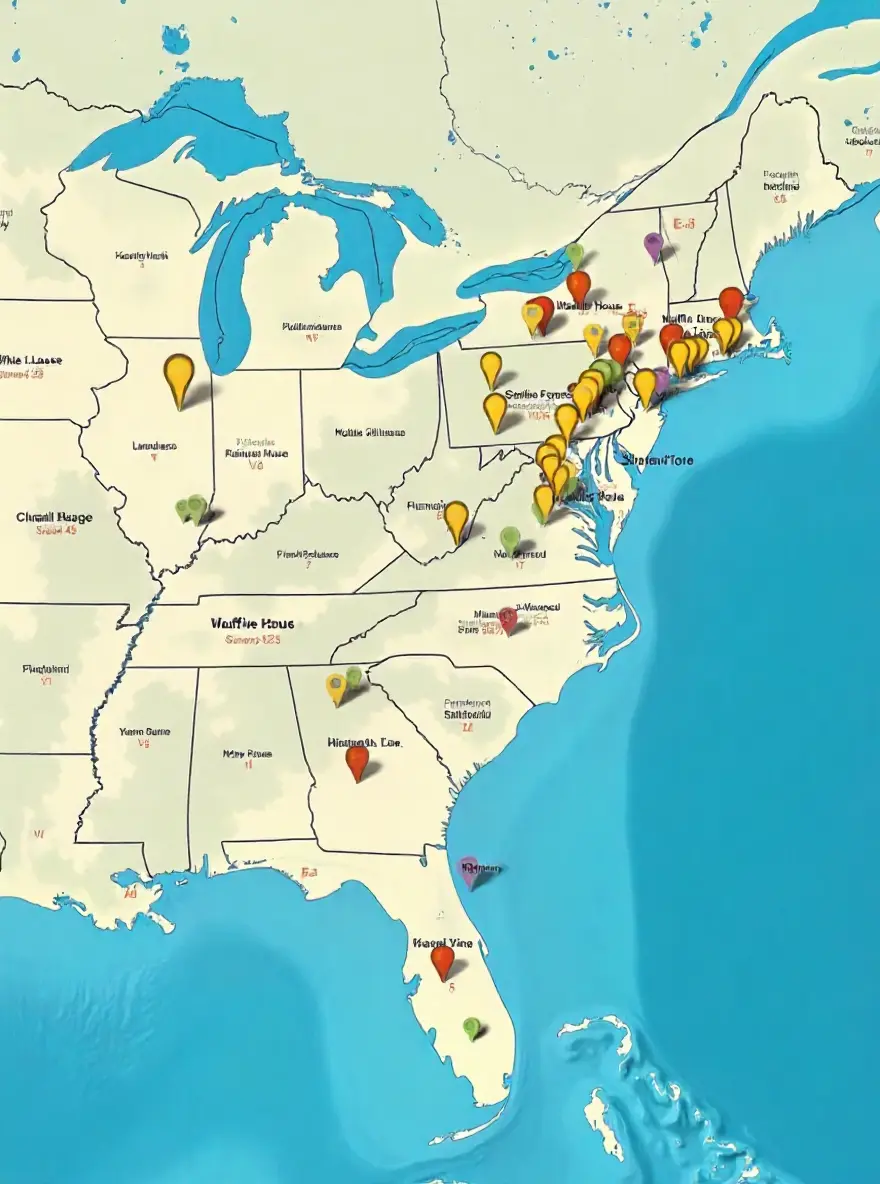
In North and South Carolina, many Waffle Houses switched to limited menus, while some closed entirely. This helped emergency crews see which towns faced the most flooding and power loss.
Hurricane Milton (2025)
During Hurricane Milton, locations in Florida and Georgia relied on generators. The few that closed showed exactly where conditions were at their worst.
Hurricane Katrina (2005)
After Katrina, long stretches of Louisiana had no open Waffle Houses. That told responders early on just how widespread the destruction really was.
Why the Index Still Matters Today?
The waffle house’s index continues to be used because it gives a fast, real-world look at how communities are doing after a storm. It doesn’t replace scientific data, but it fills in the gaps before reports are ready.
It helps identify:
- Areas with power outages or fuel shortages
- Roads that are unsafe for travel
- Communities starting to recover
- Locations where help is needed most
It’s a simple idea, but it often gives more useful information than a complicated chart.
How Reliable Is the Index?
The index is a reliable sign of local conditions, but it’s not perfect. It shows how well an area can function, not how strong a storm is. Sometimes, Waffle House closes early to protect workers, even before the worst weather hits.
Still, when many restaurants switch to yellow or red, it almost always matches what FEMA and local governments later report. That consistency is why people still trust it.
What Are the Strengths and Limits of the Index?
Strengths
- Very easy to understand
- Shows food access, safety, and power at the same time
- Gives real-time information during recovery
Limits
- Works best in the Southeastern United States
- May not reflect nationwide damage
- Based on one restaurant chain, not multiple sources
Even with these limits, it remains one of the clearest and most useful ways to understand disaster impact.
Why Do Officials and Reporters Track It?
News outlets such as CNN, NPR, and USA Today mention the Waffle House’s Index during almost every hurricane season. Reporters often visit local restaurants to see what’s being served. If the menu is shorter than usual, it usually means there are power or delivery problems.
Officials in North Carolina and South Carolina use this same information to decide where to send help first. They match Waffle House closures with outage maps to guide their response.
How Does the Waffle House’s Index Help Regular People
If your local Waffle House is open and serving a full waffle house menu, your community is likely doing okay. If it’s running a limited menu, things might be unstable. If it’s closed, you know the situation is serious.
Here’s what to remember:
- A closed Waffle House often means other businesses nearby are closed too
- A limited menu usually means you should stock up on supplies
- A full menu means your area is safe, but still stay cautious
It’s a small sign that can tell you a lot about what’s happening outside your door.
What to Do When the Index Changes?
| If You See | What It Means | What To Do |
|---|---|---|
| Waffle House closed | Severe damage nearby | Stay indoors and follow local alerts |
| Limited menu | Power or delivery problems | Keep essentials and avoid travel |
| Full menu | Stable conditions | Resume normal activities carefully |
If you notice local Waffle Houses switching to limited service, it’s often a sign that recovery might take a while. Use it as a hint to plan ahead and stay safe.
Frequently Asked Questions
What makes the waffle house index unique?
It’s based on what’s actually happening, not on forecasts. A restaurant’s ability to stay open says more about a community than a statistic ever could.
Who watches the waffle house ‘s index?
Emergency managers, reporters, and everyday people use it to track recovery after storms.
Can the waffle house’s index ever be wrong?
Yes, sometimes restaurants close early for safety reasons, but overall it’s a strong early clue of local conditions.
Is the waffle house’s index used only for hurricanes?
Mostly, but it’s also mentioned during floods, tornadoes, and winter storms when closures show real danger.
Why Waffle House and not another restaurant?
Because it’s open all day, has backup plans, and is known for serving customers even in bad weather.
Final Thoughts
The waffle house index shows that simple ideas can carry big meaning. A single menu can reveal the strength and resilience of a whole community. Green means life goes on. Yellow means people are coping. Red means it’s time to help.
It’s not just a fun fact about a restaurant chain. It’s a story about people who show up, cook meals, and bring a bit of comfort when everything else feels uncertain. So the next time a storm rolls through, take a moment to look at your local Waffle House. Whether it’s serving breakfast or taking a break, it’s quietly telling the story of recovery.

James Peter
James Peter, the charismatic food lover with a generosity almost as large as his love towards good food. Having had a professional background in experience and passion for cooking for several years. James include passion in the preparation of all the foods that we offer in our restaurant menu. He has tips and tricks to make ordinary meals extraordinary and guarantees that every bite would give you sweetness, satisfaction and pleasure.